
The Mass Deportation of the Ingush People: Crimes of the Soviet Communist Regime Against the Ethnic Minorities of the North Caucasus
In February 1944, the Soviet government carried out the mass deportation of the Ingush people under Operation “Lentil,” forcibly removing the population to Northern Kazakhstan and Central Asia on fabricated charges of collaboration with Nazi Germany. The operation, meticulously planned and executed by the NKVD and the military, resulted in devastating demographic losses and the dispossession of Ingush ancestral lands–consequences that were only partially addressed during the post-1954 rehabilitation process. These events have since been recognized in international legal discourse as acts of genocide, forming the basis of the Ingush people’s ongoing demand for historical justice and official recognition.
On February 23, 1944, the mass forced displacement of the Ingush and Chechen peoples to northern Kazakhstan and Central Asia began. The special operation ‘Lentil’ (Russian: Чечевица, romanized: Chechevitsa) was conducted by the NKVD and the military under the orders of Joseph Stalin and Lavrentiy Beria.[1] It represents one of the most severe crimes committed by the Soviet communist regime against ethnic minorities.
The deportations of the Ingush, Chechens, Balkars, Karachays, Kalmyks, and Crimean Tatars were classified as “retaliatory deportations”. The Soviet authorities justified these actions by citing widespread complicity and “collaboration with the Nazis,” (even though the territories of the Ingush, Chechens, and Meskhetian Turks were never under German occupation), the existence of the rebel organization United Party of Caucasus Brothers, and the populations’ non-participation in Soviet collectivization.[2]
The deportation was the result of a systematic imperial policy in the North Caucasus. Soviet ethnic deportations were based on long-standing pre-revolutionary notions of “reliable” and “unreliable” peoples, which authorities used as a pretext to forcibly remove populations deemed untrustworthy.
The strategic interests of Stalin’s “empire” in the Caucasus aimed to establish a “colonial and military-police corps of loyal, subordinate, and obedient alien people”[3] in the region, to safeguard the Soviet Union’s interests in strategically important border areas—particularly in relation to Middle Eastern and Asian policy—and to serve as a springboard for future expansion. Liberating the Caucasus from its indigenous population was a logical part of this plan.
Along with their homeland, the “punished” nations were deprived of their national autonomy.[4] The Ingush ethnic territories were divided between the North Ossetian ASSR and the Georgian SSR, and all Ingush place names were replaced with Ossetian or Russian ones.
The Ingush people permanently lost their ethnic cradle—the Prigorodny District—which was forcibly transferred to North Ossetia and continues to be a potential hotspot for regional conflicts and local disputes to this day.
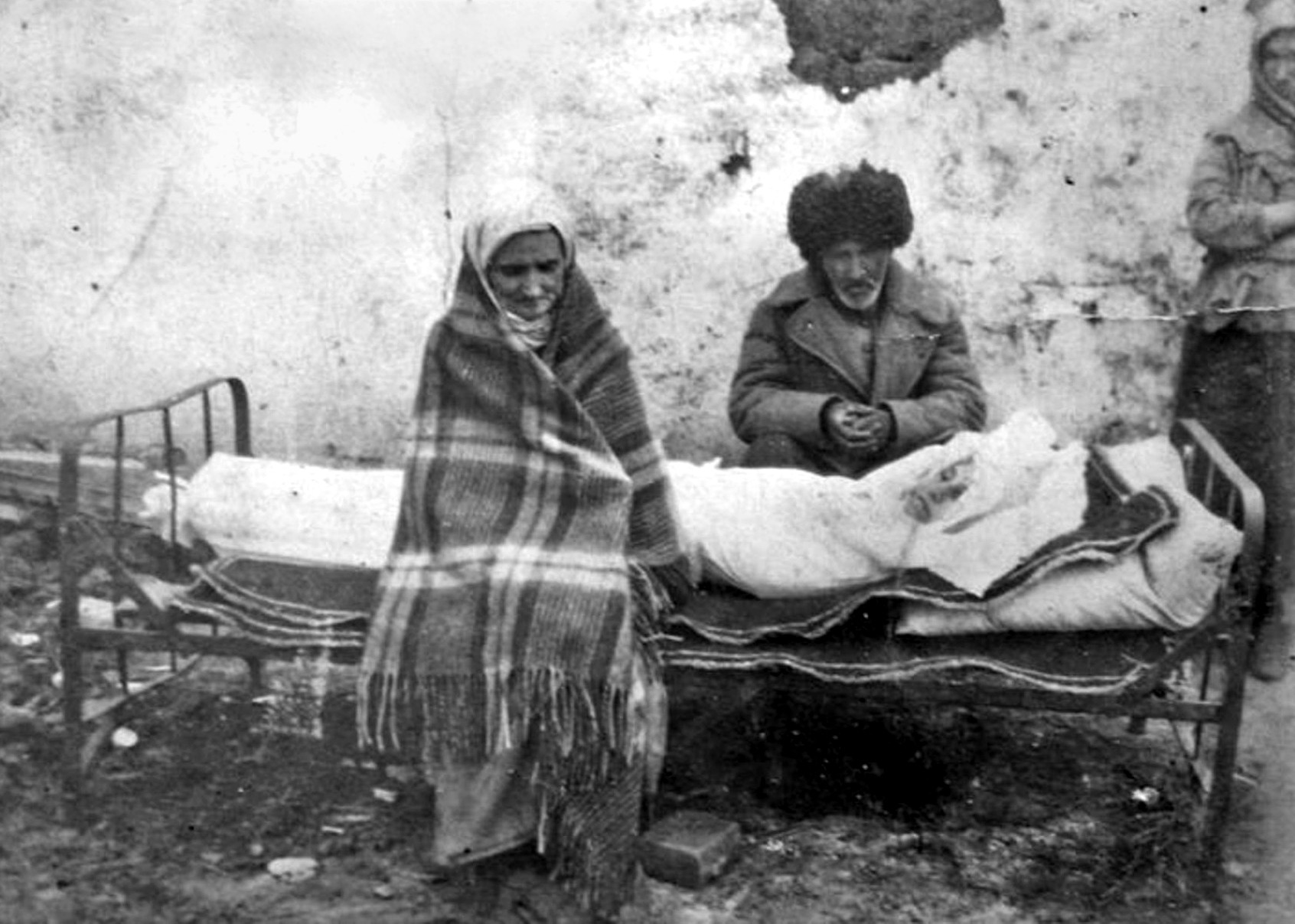
A meticulously planned crime
From January 1943 to January 1944, extraordinarily thorough and meticulous preparatory work was carried out by the NKVD. Maps of all settlements were compiled; roads, bridges, and mountain crossings were repaired; and an unprecedented number of military personnel was assembled in the region. The local NKVD staff was expanded accordingly. A complete census of the population was conducted, with particular attention to males aged 17–50. In October 1943, residents of the Stavropol Territory were already being recruited to move into areas that were to be cleansed of the Ingush and Chechens.
In October 1943, the so-called Beria group was formed to oversee Operation “Lentil.” It included State Security Commissioners of the 2nd rank Ivan Serov, Bogdan Kobulov, Sergey Kruglov, and Lieutenant General Arkady Apollonov. Railroad transportation fell under the supervision of Solomon Milstein, head of the 3rd department of the NKGB. Major General Bochkov, head of the NKVD Convoy Troops Department, received orders to ensure the protection of the “special contingent” at departure stations and throughout their transport to the designated settlement locations. Plans and instructions for equipping trains, wagons, food, etc., were finalized by January 26, 1944, when Beria approved the transportation plan. From that day forward, Ingush and Chechens were referred to in documents as “SC” (short for “special contingent”) and ceased to be treated as human beings.
A total of 19,000 operational workers of the NKVD, NKGB, and SMERSH, along with 96,073 personnel of the NKVD’s internal troops, were deployed to the republic. Beria, who signed the final instruction on the deportation procedures for the “SC” and the rules for their escort on January 29, 1944, exercised overall command of the “Chekist-military operation with the special contingent” (a contemporary term taken from documents of the time).
The territory of the Chechen-Ingush ASSR was divided into four sectors:
-
Vladikavkaz and its districts (18% of those deported) —assigned to Kobulov;
-
Slepsovskaya Stanitsa and its districts (13%) —assigned to Apollonov;
-
Gudermes (25%) —assigned to Kruglov;
-
Grozny and its districts (43%) —assigned to Kruglov, the overall leader of the operation.
All ethnically Ingush people, including children, were subject to deportation. The only exceptions were Ingush women married to men of other nationalities and Russian women married to Ingush men who chose not to accompany their husbands.
Each operational unit, consisting of one NKVD agent and two NKVD soldiers, was assigned to deport four families—a process that involved searching them, reading the deportation order, loading their belongings, and completing their registration cards. Special settlers were allowed to take a maximum of 40 kg of personal belongings per person. Livestock, grain, and valuable items were confiscated. People were taken to railway stations and loaded into “teplushka” (Russian: теплушка), that is, cargo wagons.
The democide
The “cleansing” of the special contingent began on February 23, 1944, and was largely completed by February 28, 1944. In total, 134,178 Ingush and 362,282 Chechens were transported in 180 trains, with each wagon carrying 150 people instead of the intended 40, to Kazakhstan and Central Asia. During transport, 1,272 people died, and 2,896 were infected with typhus. The special operation resulted in the killing of 780 people; 2,016 were arrested; and 6,544 managed to escape into the mountains.
The “non-transportable” elderly and sick Ingush highlanders, who had remained in their villages until February 29 due to heavy snowfall and impassable mountain roads, were executed on the spot by NKVD agents. Shootings and burnings of hundreds of inhabitants in Ingush villages (such as Targim, Khamkhi, Tsori, and many others) are documented in survivor testimonies. At least 70 villages and small settlements in highland Ingushetia were destroyed between late February and the summer of 1944.
“In the overcrowded cattle cars, without light or water, we traveled for almost a month to an unknown destination,” recalled Khamatkhan Arapiev.[5] After the deportation was completed, strict state control was imposed over the special contingent. This control was enforced by special NKVD commandants' offices (under Regulation №34-16с, January 8, 1945). The deported Ingush and Chechens were allowed to move only within a three-kilometer radius of their assigned place of residence.
All settlements were divided into “decadomain” units, each consisting of ten households. The deportees, including children, were required to register weekly at special commandant’s offices. Any active individuals were suppressed through criminal prosecution—including political charges—which often resulted in long prison sentences or the death penalty.
“Hunger, cold, epidemics lasting until 1946, lack of suitable housing, and arrests became the reality of life in the first years of deportation. In 1948–1949, Stalin’s ‘new course’ for pacifying the post-war population regarding its deportation policy further tightened the special resettlement regime. Violations of the special regime were punishable by up to 25 years of imprisonment or hard labor[6].”[7]
In 1948–1949, Stalin’s ‘new course’ to pacify the post-war population and enforce deportation policy further tightened the special resettlement regime. Violations of this regime were punishable by up to 25 years of imprisonment or hard labor.
The irrecoverable demographic losses of the Ingush people between 1944 (134,178 individuals) and 1953 (83,518 individuals) amounted to 37.8%, or 50,660 people. The demographic impact of the deportation is further evident when comparing the 1939 and 1959 figures: 125,500 and 110,000 respectively, indicating that by 1959 the Ingush population had recovered to only 87% of its 1939 level.[8] Thus, the Ingush were among the worst affected, suffering one of the most catastrophic forms of democide[9].[10]
The “Rehabilitation” and the Prigorodny District
In 1954, a partial and cautious process of rehabilitation and restoration of civil rights began. On July 16, 1956, the decree “On the Removal of Restrictions on Special Resettlement…” lifted movement restrictions but did not grant the right to return to their homeland. The decree made no mention of political rehabilitation.[11]
The punished nations were effectively reclassified as pardoned due to changing circumstances. The “freed” Ingush were forced to sign declarations affirming that they had no claims against the state and understood that returning to their places of origin was forbidden. Meanwhile, North Ossetia had already issued directives prohibiting the sale or rental of housing to any Ingush who might attempt to return. The Ministry of Internal Affairs and State Security, headed by Ivan Serov, issued instructions to prevent the Ingush from entering the Prigorodny District.
“Administrative-territorial rehabilitation (restoration of national statehood) was not accompanied by territorial rehabilitation (restoration of the borders of national autonomy as they existed before deportation); therefore, it was fundamentally incomplete” .[12]
On January 9, 1957, by decree of the Presidium of the Supreme Soviet of the USSR, the Chechen-Ingush ASSR was restored. However, the Prigorodny District and several territories bordering Georgia were not returned to the Ingush. In total, 16% of historically Ingush territories remained annexed.
The “Law on Rehabilitation,” passed in April 1991, was never implemented. Neither during the “Khrushchev Thaw” nor in the post-Soviet era—the so-called “democracy”—was Bolshevik–Communist terror officially recognized as ethnic genocide against the nations repressed in the 1940s. Soviet mass terror was never legally defined as criminal within the state policy framework (as was done in Nuremberg for Hitler’s policies), and the criminal nature of Stalin’s policies was never formally acknowledged.
International legal grounds for seeking historical justice and political subjectivity
Although the Soviet system has long since passed, the Ingush people’s struggle for historical justice and recognition continues to evolve within the framework of international law. On February 26, 2004, the European Parliament issued a landmark resolution formally characterizing the mass deportation of the Chechen and Ingush peoples on February 23, 1944—carried out under Stalin’s orders—as an act of genocide. The Parliament noted that this atrocity meets the criteria established by the 1948 UN Convention on the Prevention and Punishment of the Crime of Genocide. This international consensus serves not only as a belated judgment on past crimes but also as a legal foundation for the restoration of the victims’ national agency.
Today, this pursuit of historical redress has expanded from human rights advocacy into the realm of political sovereignty. On February 6, 2024, the Verkhovna Rada of Ukraine adopted Resolution 3562-IX, which recognizes the right of the Ingush people to establish a sovereign national state. The resolution condemns Russia’s historical and ongoing crimes against the Ingush, including the 1944 deportation, and affirms the necessity of restoring the territorial integrity of Ingushetia. From Brussels to Kyiv, these legal instruments constitute the international pillars for the reconstruction of Ingush political subjectivity. They demonstrate that the healing of such ethnic trauma can only be achieved through a comprehensive recognition of the truth and the restoration of territorial justice.
Leyla Albagachieva is a scholar and researcher dedicated to the history of the Ingush people. Her work focuses on the documentation of the 20th-century history of the North Caucasus, with a particular emphasis on the socio-political impacts of Soviet-era policies on the Vainakh peoples.
Mariam Yandieva is a prominent Ingush historian, philologist, and human rights activist. She serves as the head of the Ingush branch of the International Society "Memorial" and has authored numerous monographs and articles on the 1944 deportation and the history of the Ingush national movement. Her research is instrumental in uncovering archived materials related to the repression of Caucasian nations, and she is a key figure in international efforts to recognize the historical grievances of the Ingush people.
[1] Resolution of the State Defense Committee, “On the Elimination of the Chechen-Ingush Autonomous Soviet Socialist Republic and the Mass Deportation of all Highlanders to the East,” No. 5148ss, February 11, 1944.
[2] Dalkhat M. Ediev, Demograficheskie poteri deportirovannykh narodov SSSR [Demographic losses of the deported peoples of the USSR] (Stavropol: AGRUS, 2003).
[3] Abdurakhman G. Avtorkhanov, Ubiistvo checheno-ingushskogo naroda: Narodoubiistvo v SSSR [The murder of the Chechen-Ingush people: Genocide in the USSR] (Moscow: Dika-M, 1991).
[4] Decree of the Presidium of the Supreme Soviet of the USSR, “On the Liquidation of the Chechen-Ingush ASSR and the Administrative Structure of Its Territory,” March 7, 1944.
[5] Nikolai F. Bugay, Deportatsiia narodov: Voina i obshchestvo, 1941–1945 [Deportation of peoples: War and society, 1941–1945] (Moscow: Nauka, 2004).
[6] Council of Ministers of the USSR, “Resolution No. 418-161ss: On the Exile, Deportation, and Special Settlement of the Chechens, Ingush, Karachais, Balkars, Crimean Tatars, and Others,” February 21, 1948. Presidium of the Supreme Soviet of the USSR, “Decree: On Criminal Responsibility for Escapes from Places of Compulsory and Permanent Settlement of Persons Resettled in Remote Areas of the Soviet Union during the Great Patriotic War,” November 26, 1948.
[7] Mariam D. Yandieva, Deportatsiia ingushei [The deportation of the Ingush] (Nazran: Ingush Memorial, 2011).
[8] Mariam D. Yandieva, Deportatsiia ingushei [The deportation of the Ingush] (Nazran: Ingush Memorial, 2011).
[9] Democide refers to (mass) murder of groups of people by their government (including genocide and politicide).
[10] Pavel M. Polyan, Ne po svoei vole... Istoriia i geografiia prinuditel'nykh migratsii v SSSR [Not of their own will... The history and geography of forced migrations in the USSR] (Moscow: OGI-Memorial, 2001).
[11] Presidium of the Supreme Soviet of the USSR, “Decree: On the Removal of Restrictions on Special Resettlement of Chechens, Ingush, Karachais, and Their Family Members Deported during the Great Patriotic War,” July 16, 1956.
[12] Pavel M. Polyan, Ne po svoei vole... Istoriia i geografiia prinuditel'nykh migratsii v SSSR [Not of their own will... The history and geography of forced migrations in the USSR] (Moscow: OGI-Memorial, 2001).